חומעה משלחפת
| Scientific name: | Rumex vesicarius L. | |
| Synonym name: | Acetosa vesicaria (L.)Á.Löve | |
| Common name: | Sorrel, Bladder dock, Rosy dock, Ruby dock | |
| Hebrew name: | חומעה משלחפת | |
| Family: | Polygonaceae, Buckwheat family, ארכוביתיים |
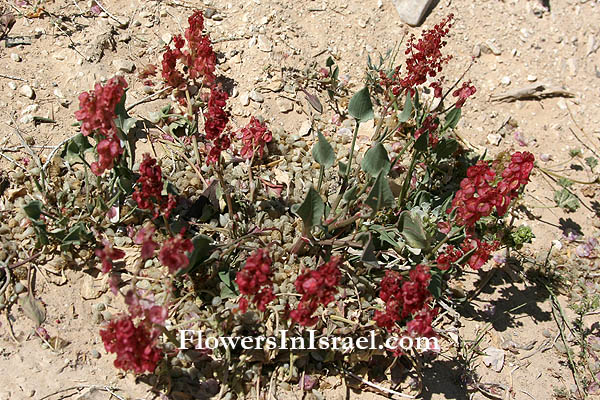
Location: Arava |
| Life form: | Therophyte, annual | |
| Leaves: | Alternate, entire, smooth | |
| Flowers: | Green | |
| Flowering Period: | February, March, April | |
| Habitat: | Desert, Thermophilous plants | |
| Distribution: | Mediterranean Woodlands and Shrublands, Semi-steppe shrublands, Shrub-steppes, Deserts and extreme deserts | |
| Chorotype: | Saharo-Arabian | |
| Summer shedding: | Ephemeral |
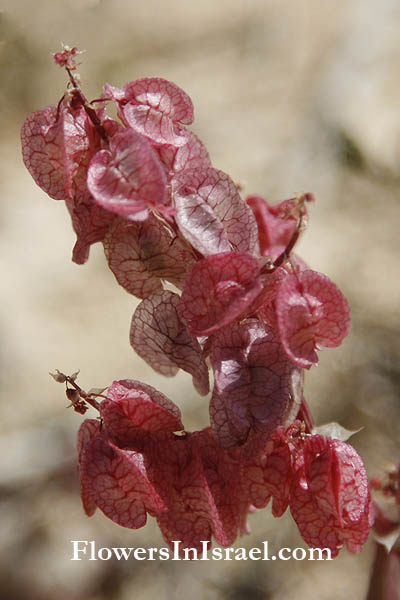
Location: Arava Derivation of the botanical name: Rumex , the ancient Latin name for the docks or sorrels. vesicarius, vesica, a bladder; from the inflated pods following the flowers on these herbs. Acetosa, from Latin acetum, vinegar; Pre-Linnaean name for common sorrel and other plants with acid leaves. The Hebrew name: חומעה, hum'ah (sorrel, rumex), formed from Aramaic: חמע, hum'a, with suffix h.
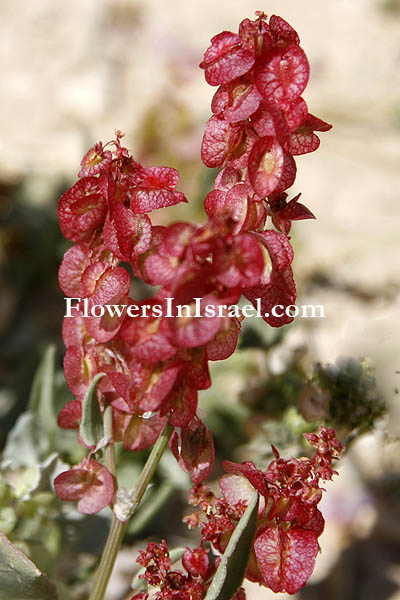
Location: Arava |